Day 8 (July 16, 2021): The Irish Loop and the Cape Shore
Having made the transition from Newfoundland's south and west coasts yesterday, today marked the start of our exploration of the Avalon Peninsula. Having both grown up on the Avalon, it may seem odd to learn that neither of us has ever been around the peninsula! This summer trip 'home' to Newfoundland presented an excellent opportunity to see the full peninsula, and to take Pam's mom along for a much needed jaunt outside St. John's.
We left St. John's at 9:30AM and arrived at our AirBnB in Branch at 5:45PM. It was a 350KM trip and only covered half the Avalon. To put it in perspective, you could leave Innsbruck, Austria, drive through the small country of Lichtenstein and on to Zurich, in the center of Switzerland, and that is only a distance of 280KM! It just goes to show how vast the island of Newfoundland is.

Our Avalon roadtrip comprises two of the province's tourism routes, both of which we touched on today: the Irish Loop (routes 10 and 90, south of St. John's) and the Cape Shore (routes 91, 92 and 100). A fog bank hung off the eastern coastline all day and didn't impact us until we hit the very south of the peninsula. Unfortunately, it did impede our plans to see a couple of the important sites along the southeastern tip of the Avalon: Cape Race (famous for having received word from the Titanic in 1912 that it had hit an iceberg) and the Mistaken Point Ecological Reserve (a UNESCO World Heritage Site boasting a collection of over 10,000 fossils).
Today's route passed literally dozens of communities and coves, not to mention great swaths of pristine barrens and woodlands.
When we arrived at our accommodations in Branch, we were amazed that it had taken a full day to cover just a very small corner of Newfoundland. Our AirBnB tonight is an old saltbox-style home which was completely gutted and renovated and put on the rental market in May 2021. The town is socked in with fog this evening, but a wonderful turkey dinner at the local restaurant was a fine reward for the day's adventure.
Tomorrow we continue westward across the peninsula to visit the famous Cape Saint Mary's Seabird Sanctuary. So there is a lot more of the Avalon to look forward to.
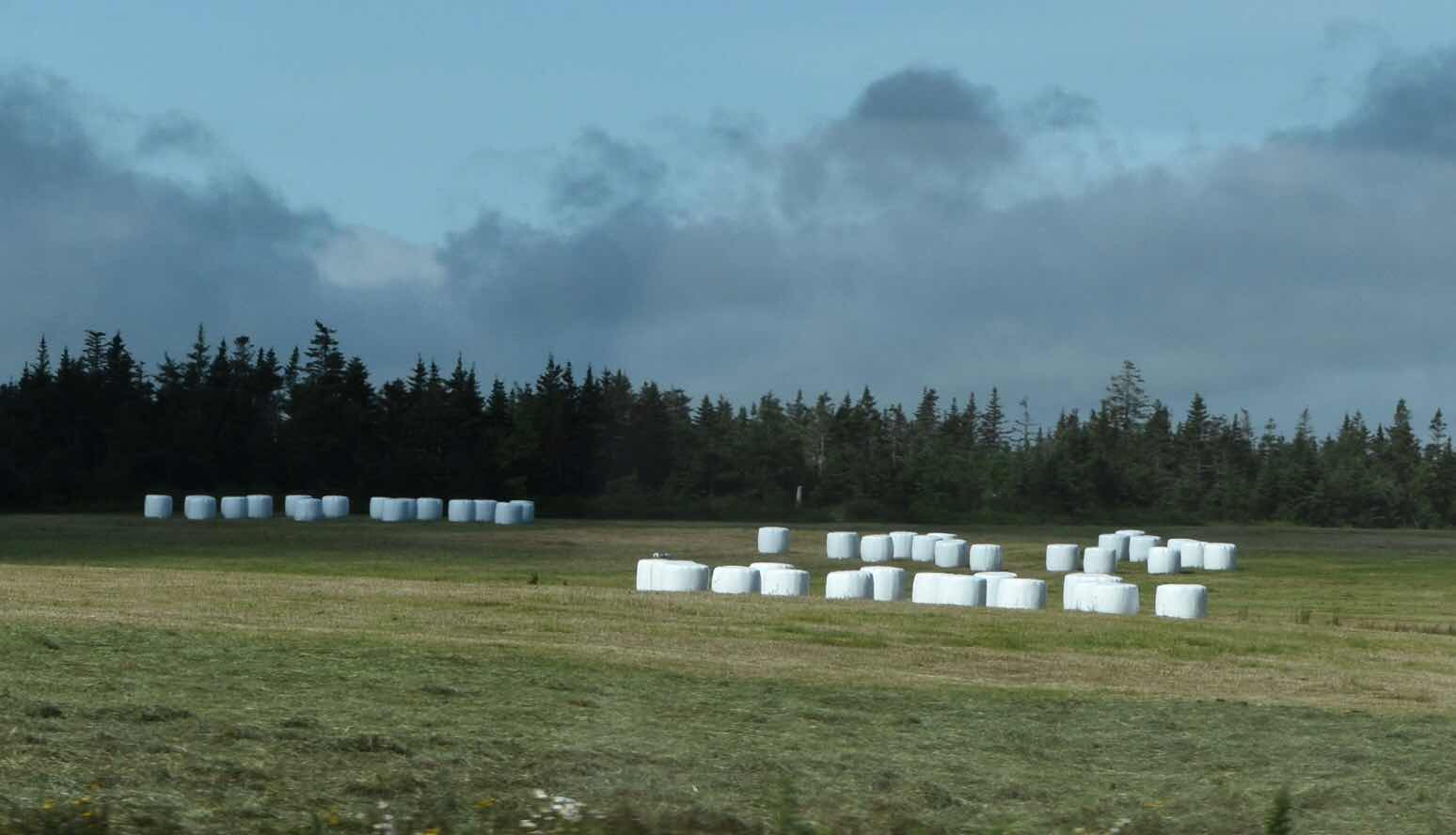
Newfoundland has very few agricultural areas. But the Goulds area, just south of St. John's is one of the exceptions. To see these 'jelly rolls' of hay bales may be commonplace in most of Canada, but is a rarity here.
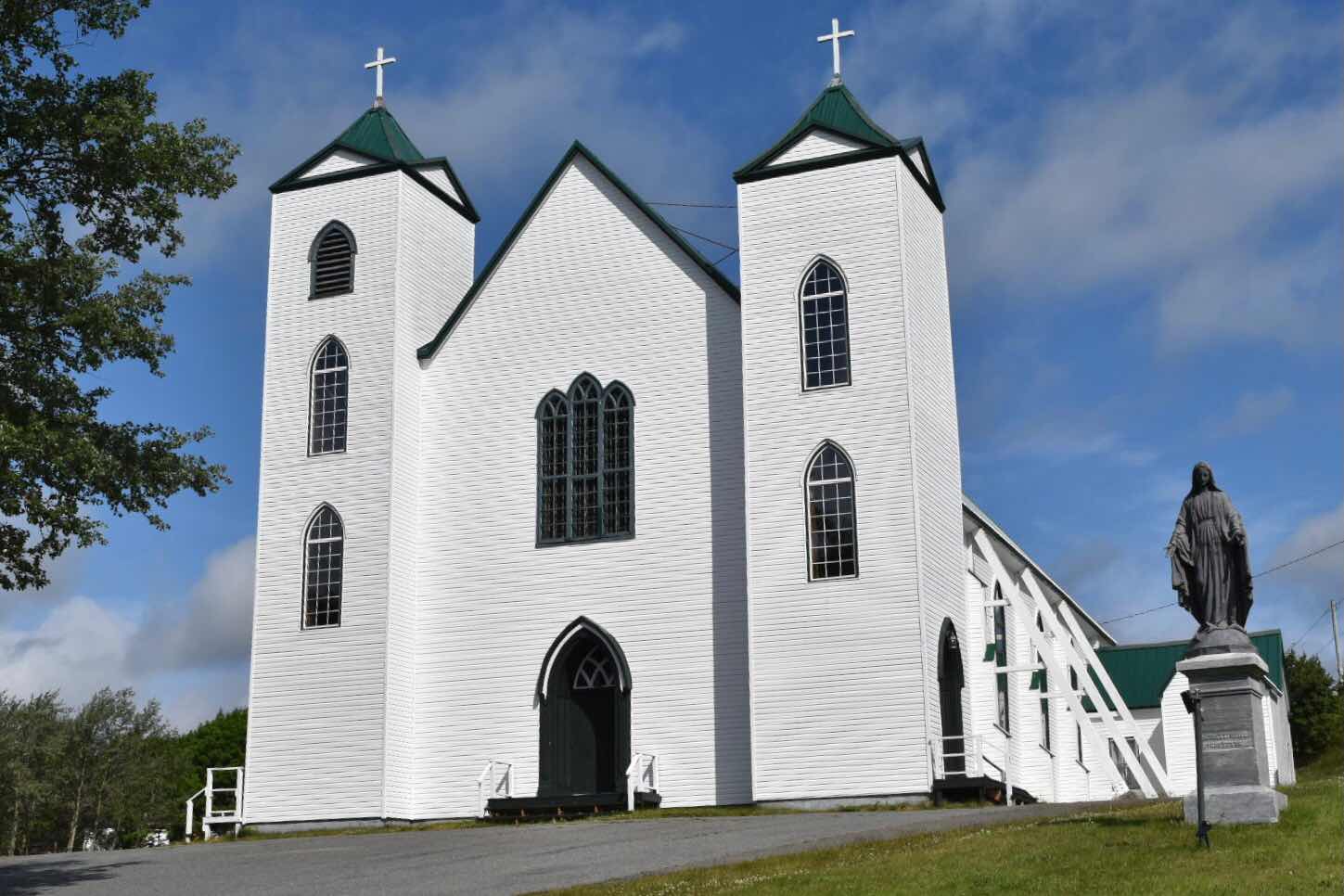
Saints Peter and Paul Catholic Church in Bay Bulls, built in 1890.

The Marine Base in Bay Bulls. We were fascinated by the size of the chains - zoom in to see the size of the links!
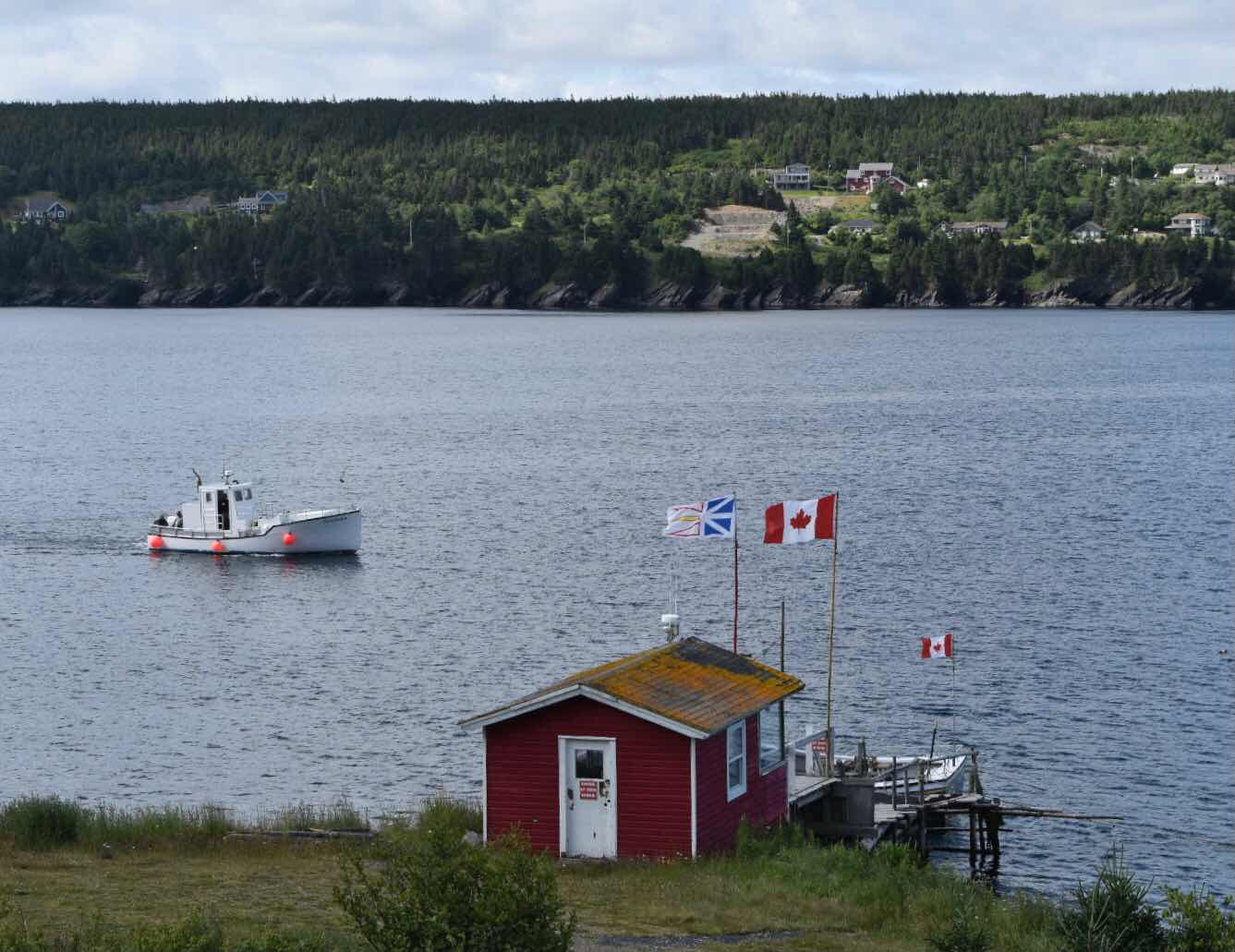
Fishing boat returning to port in Bay Bulls.
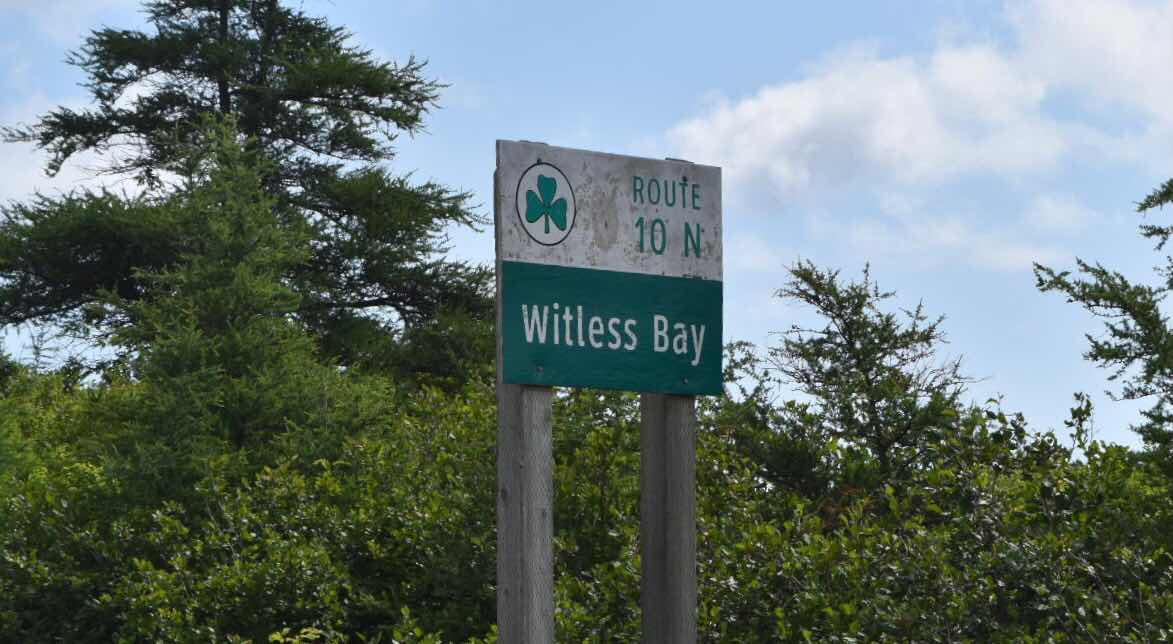
Witless Bay: a favourite Newfoundland place name.

Fox Island, Ship Island and Pee Pee Island (yes, you read that correctly!) - just off the coast or Tors Cove (originally known as Toads Cove). An interesting tale about Fox Island: it has been in the hands of the O'Driscoll family for over 200 years. In the late 1700s, a British man-o-war was inching along the shore in heavy fog, towards St. John's. They came across some fishermen and asked one -- an O'Driscoll of Tors Cove, to come aboard and help guide them. When the ship returned to England, the British Admiralty wrote to the Governor of Newfoundland to express gratitude and asked that something be done for the O'Driscoll man. He requested a deed to Fox Island (far left in the photo above), and it has been owned by the family every since.

We took a walk in La Manche Provincial Park - another Newfoundland park on David's bucket list.
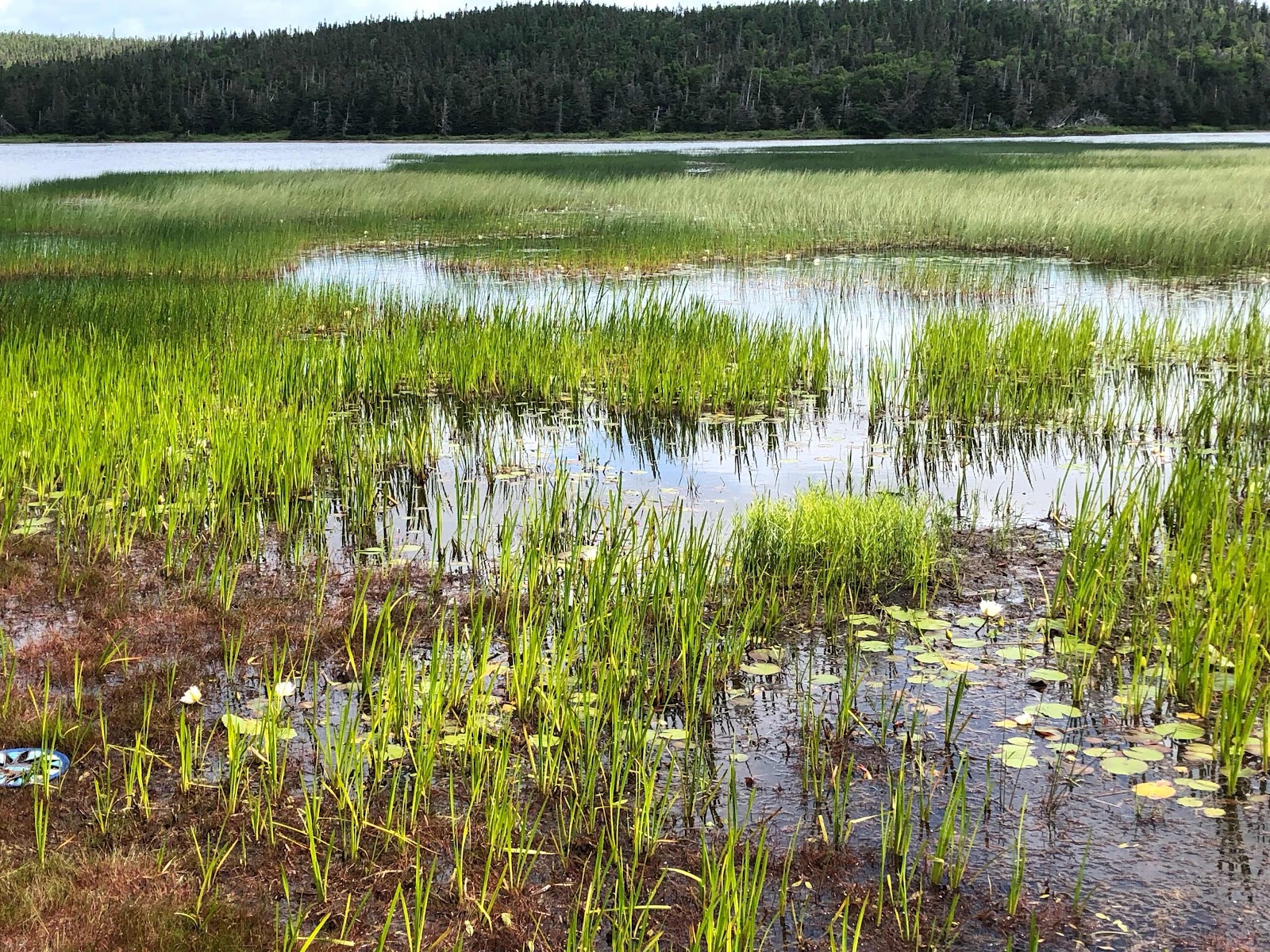
The pond at La Manche was alive with frogs and water lilies in full bloom.
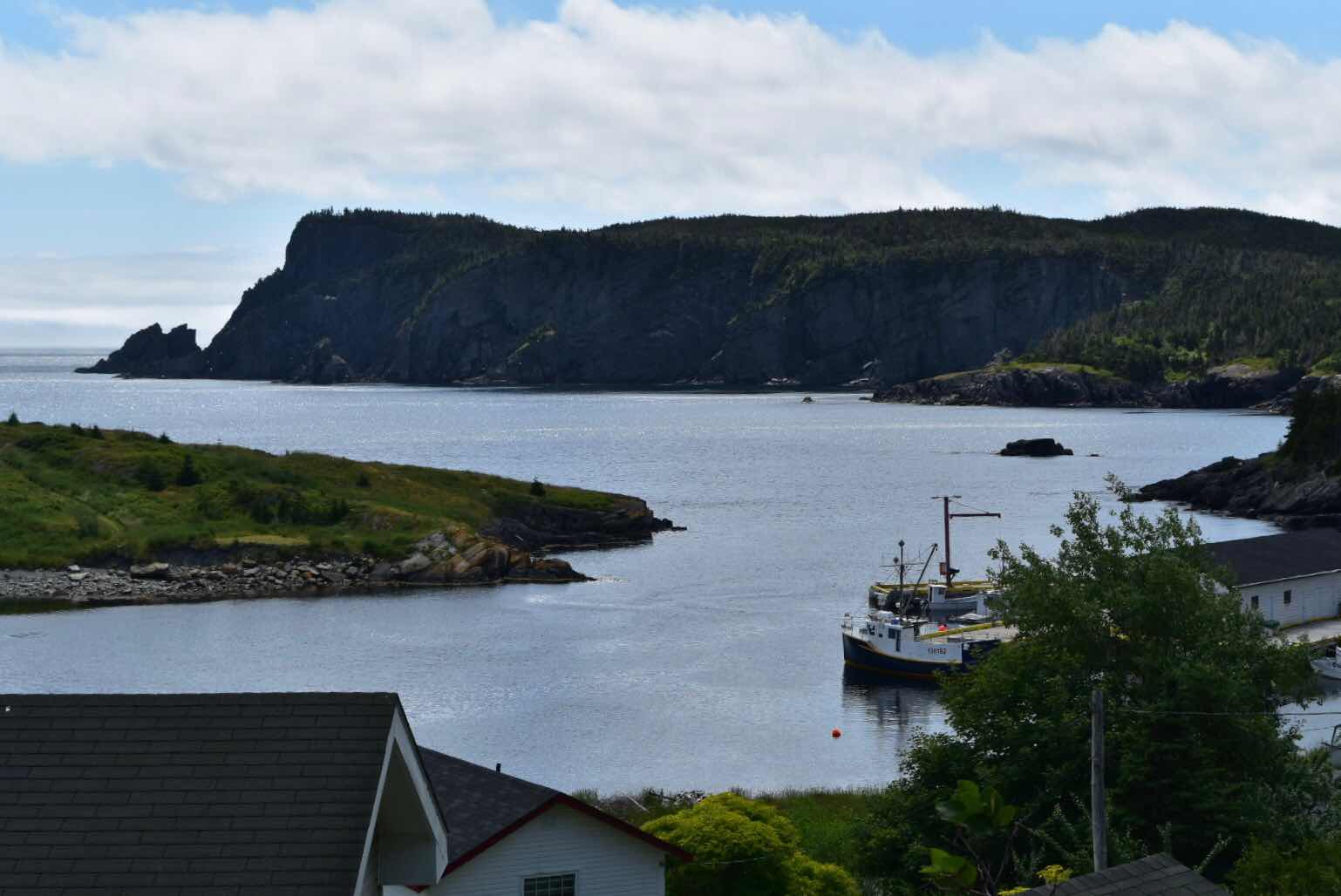
Brigus South

Scenes of picturesque Ferryland
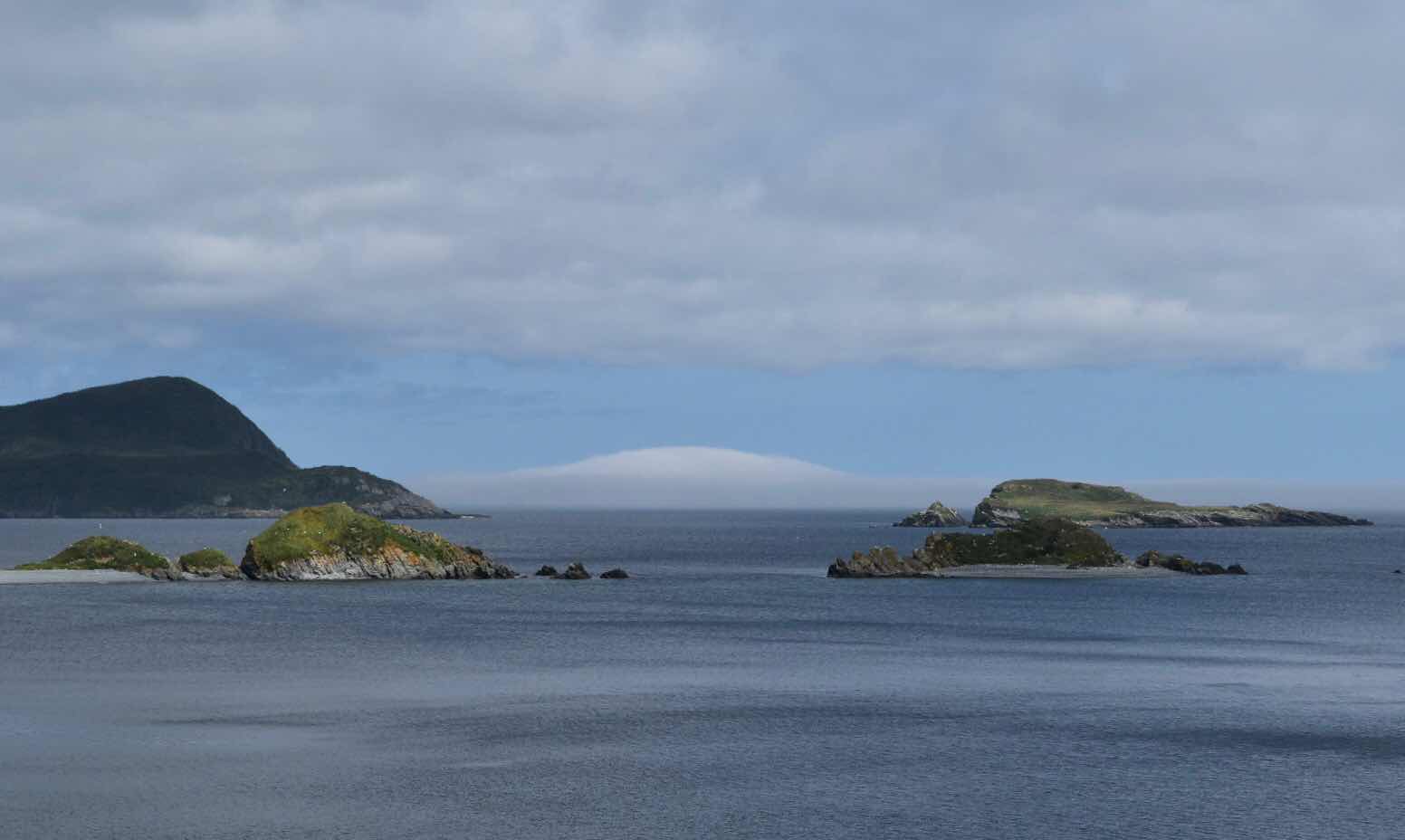
Note the fog bank 'dome' in the distance.

Love these benches at Ferryland! Every town should have a set.

The replica of the English Kitchen Garden at the Colony of Avalon in Ferryland. Established in 1621 by Sir George Calvert, the Colony of Avalon is widely recognized as the best preserved early English colonial site in North America. Ongoing archaeological work since the 1990s is revealing much about Ferryland's past.

Excavated remains of the harbour wall from the 1600s, at the Colony of Avalon, Ferryland.

Excavated remains of the building foundations from the 1600s, at the Colony of Avalon, Ferryland. Neat to see archaeologists at work.

Ferryland
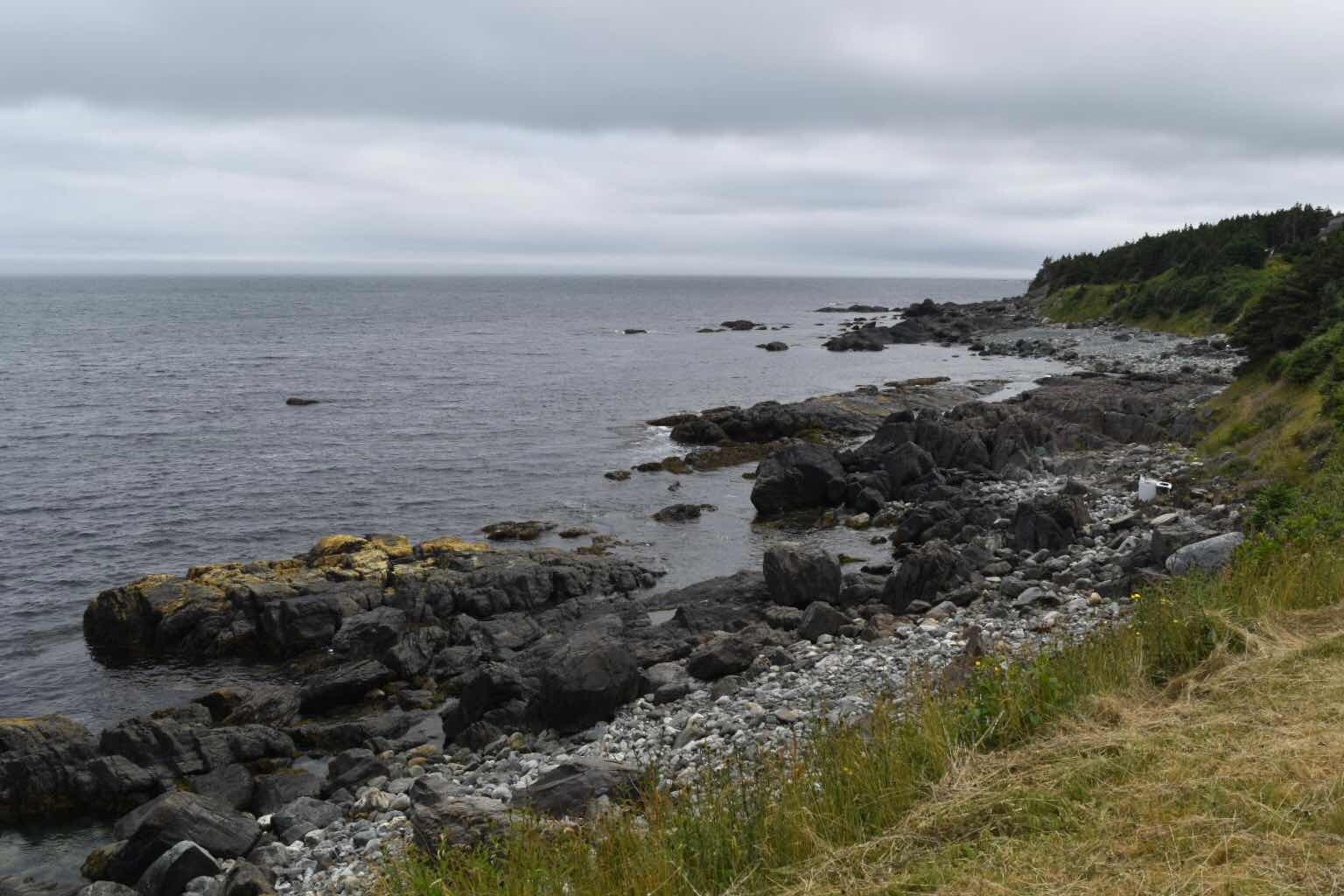
Bear Cove, Cappahayden. In 1918, just offshore from this site, the SS Florizel, flagship of the Bowring Brothers' Red Cross Line of steamships and one of the first ships in the world specifically designed to navigate icy waters, sank after striking a reef at full speed, with the loss of 94 lives. As it turns out, the great grandfather of our friend, Debbie Rice, was one of those 94 lives lost: Wilbert Butler of St. John’s, age 35, died in the tragedy.

The interpretive centre of the Mistaken Point Ecological Reserve. While it was too foggy to go to the actual site to see the fossils, or to drive the even further distance to the historic lighthouse at Cape Race, the centre contained excellent explanations, fossil samples, and explained the importance of Cape Race.

The lighthouse at Powles Head, near Trepassy. Ooof - that foghorn was blowing loudly!

The incredibly wide and long beach connecting Saint Stephens and Saint Vincents is a well-known site for spotting humpbacks. Capelin spawn on the sands in great quantities, so the whales show up to eat them before they make it to the sand!

Our AirBnB in Branch - a totally refurbished and modern version of a Newfoundland saltbox-style home, on the banks of a salmon river.


The thick fog at Branch.



Comments
Post a Comment